
Drying Waterproof Country Clothing Without Damaging Its Finish
A waterproof jacket is often best simply left to dry. Yes, that's to dry and not to be washed. High heat in a dryer, shrunk and cramped clothing squeezed around a radiator and left in a kit bag for months could all make a waterproof jacket less waterproof and stiffer as well as less comfortable. […]
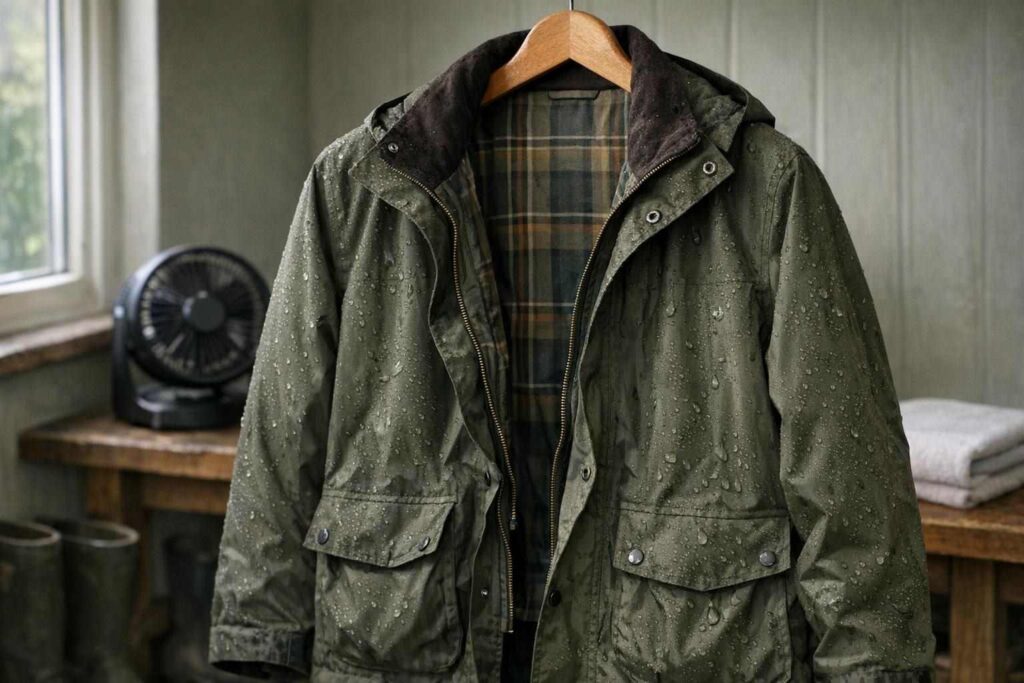
A waterproof jacket is often best simply left to dry. Yes, that's to dry and not to be washed. High heat in a dryer, shrunk and cramped clothing squeezed around a radiator and left in a kit bag for months could all make a waterproof jacket less waterproof and stiffer as well as less comfortable. Different waterproof country clothing items have different fabrics and different constructions and therefore need to be cleaned differently. Read the label, remove surface moisture gently and dry by airflow, low heat or professional clean as appropriate.
Start by finding out what is actually wet
First empty all the pockets. Then separate the jackets from the trousers, the fleeces from the shells and the gloves from everything else. There's lots of moisture in the dirt that gets stuck to the fabric of a soaked garment. If you leave mud and debris-covered garments laid out to dry they will develop unpleasant odours. And there's nothing worse than finding a pair of wet gloves inside a jacket's sleeve.
A shell can be perfectly waterproof but have its outer layer soaked. Open up the pockets, zip up the pit zips and front zip, and turn any removable inner liners or over-trousers inside out. That will help to get the wet areas to dry faster. Try to expose the damp areas to the air as much as possible without stretching or pulling on the garment to stop it from ripping.
Don't leave waterproof country clothing in a cramped kit bag or a room while waiting to dry it out. And don't forget that even when the outer layer of a country clothing item looks to be dry, there will be loads of moisture contained within the clothing's layers. This can rapidly create musty smells, which in turn can be difficult to get out of clothing by subsequent cleaning.
Let the care label set the limits
Care labels tell you what to do with your outer layer and this can differ vastly between a waterproof, insulated, waxed or soft shell layer. Don't assume that all waterproofs can be tumble dried for example. Most can but check the care label for your specific outer layer to be sure.
For waterproof garments, dried on a broad hanger or on a drying rack in a room with good ventilation, the item should be opened out and left to dry. Try to keep the garment away from heat sources and do not fold or squeeze garments such as trousers and jackets as this can cause damage to seams and creases. Also ensure that all fasteners are opened up to allow for maximum drying. Do not zip up pockets and ensure that any zippers are opened up as far as possible to allow for drying of the lining.
If the garment can be tumble dried, ensure that it is done on the specific setting detailed within the garment label and ensure that it is removed from the dryer while still slightly warm. If in doubt as to whether a garment can be dried in a tumble dryer, it is best to err on the side of caution and follow the guidance for drying the garment by air.
Use airflow before reaching for heat
Leave your waterproof clothing to dry slowly in a room with good airflow. Don't hang it up in a cramped wardrobe or make a kit bag a sealed bag. Give the garment a turn from time to time and make sure the hem of the garment is not touching the floor. If necessary, use a slow moving fan to increase airflow around the clothing.
The heat from a radiator, a fan heater, a fire or a hairdryer will very quickly warm up a small area of a garment. This can affect adhesives, seam tape, coatings, elastic and other trimmings on a garment. Thus we advise against hanging a wet garment to dry over a radiator, and to keep wet clothing away from stoves and other heat sources where it may touch them.
If you get a wet hem or cuff whilst out and about on a trip do not try to dry it out by pressing or wringing the waterproof clothing. Simply blot the wet area with a soft, clean towel and hang the item up to allow the full garment to dry slowly with good airflow. Pressing can cause damage to laminated panels and the seams of waterproof clothing, but this is generally worse than slowly drying out the garment by repeated twisting.
Know when the problem is the water-repellent finish
There's a big difference between a waterproof coating failing completely and outer layers of waterproof clothing failing to repel water. The fabric may appear to be stained with mud and then gradually become saturated over a large area. After that the garment may feel cold and clammy against your skin while you're walking. The membrane or coating within the garment may well be fully waterproof but the outer fabric of the shell is failing to shed water.
Cleaning the coat for dirt, body oils and other grime before trying to reproof the outer layer can also help improve performance. Do not use fabric conditioner as it can leave a residue on clothing and affect its performance to wick moisture and repel water. Any waterproofing/reproofing products must be applied in accordance with the manufacturer's instructions for the specific garment and follow the recommended methods for application and drying.
Use the test area or check for the above negative characteristics on an inconspicuous section of the garment. If any of them appear, then don't continue to treat the garment with heat and cleaners. Instead, take it to a specialist cleaner or refer to the repair guidance of the maker.
Match the method to the next outing
For a lightly damp shell left at home after a short day on the hills simply hang it up and let it dry out. For clothing soaked through on long wet days, first open out the garment and blot excess water from surfaces. Then just give it time to dry out. Note that an insulated jacket can feel dry on the outer layer but be wet in the filling of the baffles. So it takes longer to dry out than a non-insulated shell.
Waxed garments are completely different to waterproof membrane garments and should be treated differently. Do not wash or attempt to heat waxed country clothing under normal circumstances as the wax can be altered. Leather, foam or other bonded parts found on footwear, gloves and hats will also need to be treated differently to normal waterproof garments.
Good hunting clothing care consists of avoiding extremes. Do not store wet clothing in a sealed kit bag. Do not wring country clothing aggressively. Avoid direct heat when trying to dry clothes quickly. Drying country clothing is part of the process of packing down after a day's activity. Check the face fabric and the seams of country clothing that has been dried, and store it loosely to allow it to breathe. This form of care prevents damage to the finish of clothing, allows for comfort and allows for wear to be clearly seen before it is exposed on a wet day.
Related Articles
The Permission Map: A Better Pre-Season Check for Responsible UK Hunting
Navigating Hunting, in the UK: Utilizing a Permission Map In the UK hunting is not about finding the right spot. It's about knowing where you can go and where…

A Guide to Deer Stalking in the UK
A practical, unhurried introduction to deer stalking in Britain, covering preparation, fieldcraft, equipment, safe shot selection and respectful care of the ground and quarry.
Wet Boots After a Day Outdoors: What to Do Before Tomorrow
The walk is finished and the car is unpacked, but the boots are still by the door. It is easy to leave them there until you need them again…