
Wet Boots After a Day Outdoors: What to Do Before Tomorrow
The walk is finished and the car is unpacked, but the boots are still by the door. It is easy to leave them there until you need them again the next morning. What matters now is less dramatic than buying another waterproofing product: take the boots out of the bag, clean off the mud and […]
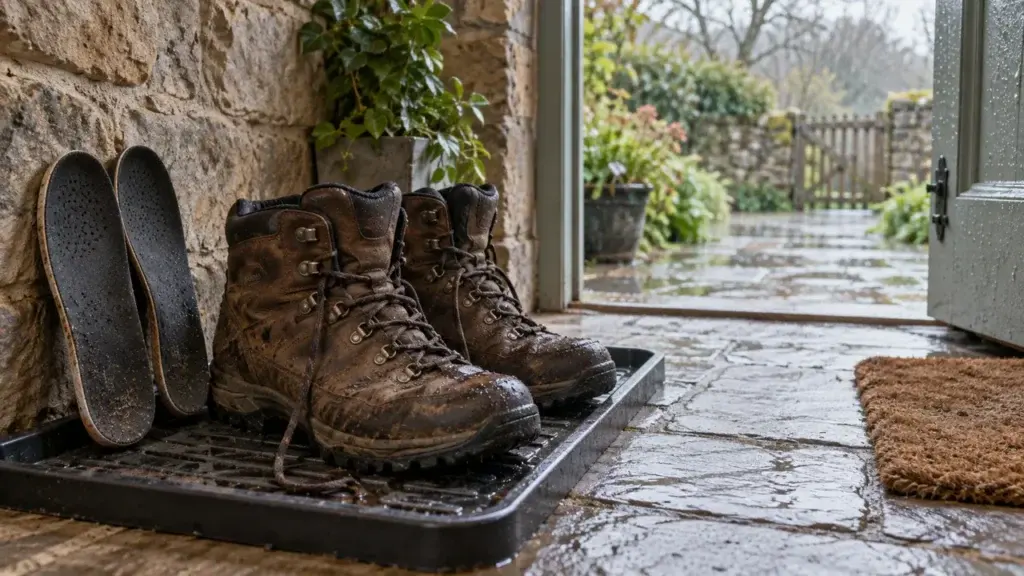
The walk is finished and the car is unpacked, but the boots are still by the door. It is easy to leave them there until you need them again the next morning. What matters now is less dramatic than buying another waterproofing product: take the boots out of the bag, clean off the mud and let the inside of the boots dry.
British field days often bring several kinds of wetness in a single outing. Rain is only one of them. Long grass, muddy tracks and moisture inside the boots all leave clues. A damp lining alone does not show that the membrane has failed.
Open them up before you forget
Loosen the laces and take out removable insoles, following the boot maker’s instructions. Keep the parts together in a place with air flow. Look at the insoles while they are out: if they are folded, worn through or do not lie flat, fix that before the next long day instead of ignoring it while walking.
Meindl’s care guidance says to clean the boots and let them dry away from heat. A radiator, fire or other strong heat source is therefore not a shortcut to rely on. The goal is drying, not heating one patch of leather while the lining stays damp.
Clean for the material you own
Take away dirt with the tools and method recommended by the boot maker. Pay attention to folds and the seam around the sole, where mud can hide damage. Do not think that the treatment used on a friend’s leather boots works for your suede, nubuck or textile boots. Identify the model and its materials before putting waxes, sprays or cleaners on the boots.
It helps to think of three jobs: cleaning, drying and any recommended conditioning or water‑repellent treatment. Those jobs are not the same. More spray does not take away mud and a fresh coat does not explain why a seam looks damaged. Read the product directions instead of adding another layer because the boots still look worn.
Look for a pattern, not a diagnosis
If a boot keeps getting wet in one spot, write down what happened after the boot dries. Was the grass tall? Could water have come in over the cuff? Did the problem happen in both boots or only one? Are there changes around the sole, stitching or flex points? These notes make a talk with the retailer or maker more useful.
Avoid testing a suspected fault with aggressive cleaning, makeshift sealants or long soaking. Those steps can make the original problem worse. If the boots are still under warranty or a return arrangement, ask about the inspection process before trying a repair.
Plan for the morning you actually have
Check the lining and insoles before repacking the boots. A boot can feel dry on the outside while its removable insole stays damp. If the boots are not ready, an alternative or a new plan is better than pretending the boots dried overnight. On a trip with consecutive outdoor days, a suitable drying space at the accommodation is worth asking for in advance.
The habit that matters is starting this job when you return. Once the boots are opened, cleaned properly and airing, the rest of the evening can belong to something else.
Sources and further reading
Related Articles
The Permission Map: A Better Pre-Season Check for Responsible UK Hunting
Navigating Hunting, in the UK: Utilizing a Permission Map In the UK hunting is not about finding the right spot. It's about knowing where you can go and where…

A Guide to Deer Stalking in the UK
A practical, unhurried introduction to deer stalking in Britain, covering preparation, fieldcraft, equipment, safe shot selection and respectful care of the ground and quarry.

Understanding the British Deer Stalking Seasons
How to plan a British deer stalking trip around changing seasons, species, weather and local rules, with a simple method for checking dates before you travel.